
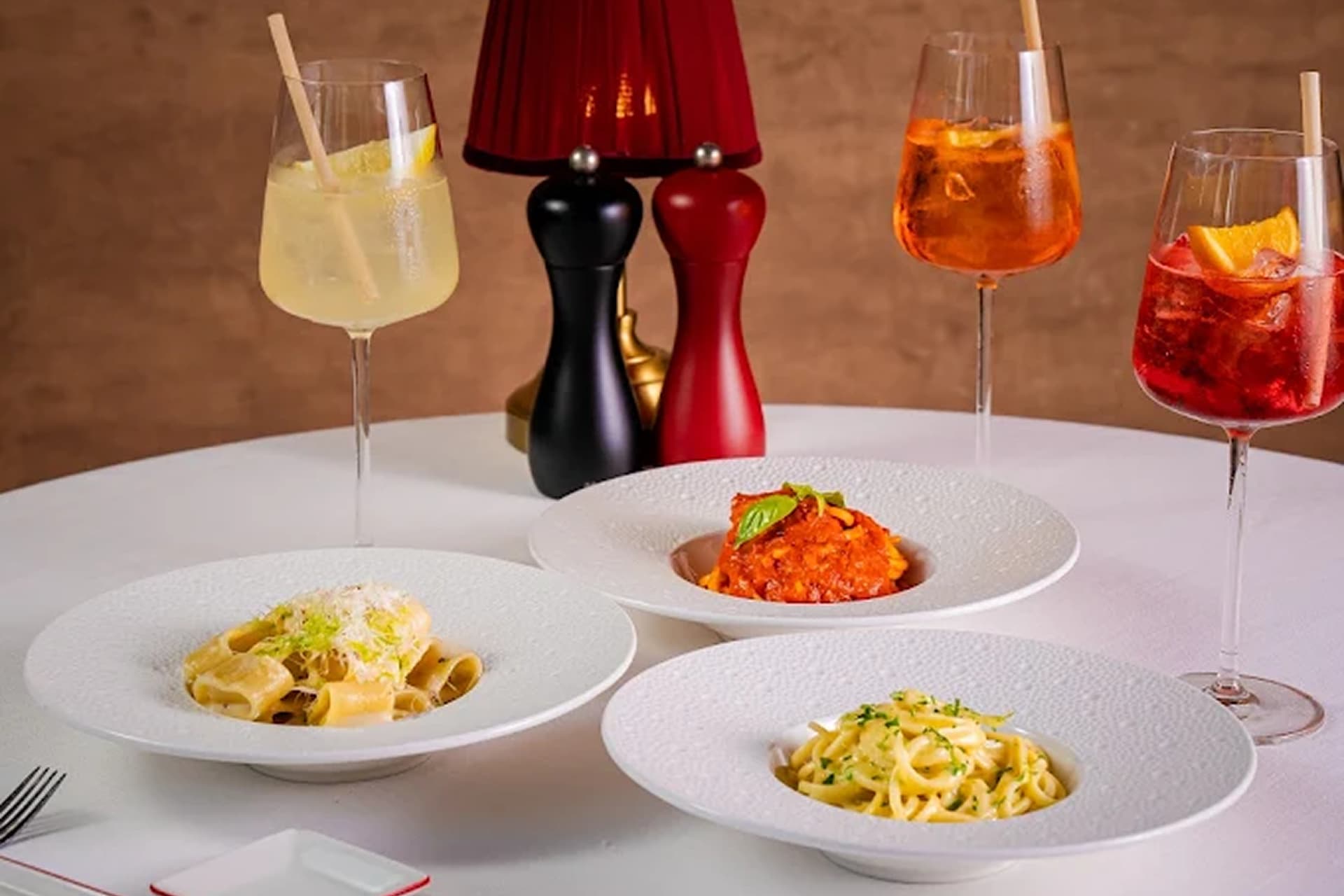
The different types of pasta can feel endless when you first open an Italian menu. Some are long and fine. Others are wide, hollow, twisted, or filled. Their names tell you something about how they are eaten, and the shape often changes how a sauce feels in each bite.
Start with the main pasta families, then explore examples from Felicità’s published Food Menu, including Linguine all’aragosta, Paccheri al ragù, and Tortelli ai funghi e tartufo.
Different Types of Pasta and What They Mean
Pasta can be grouped by length, shape, filling, and how it is made. Long pasta includes spaghetti and linguine. Short pasta covers tubes and twists, while filled pasta holds cheese, vegetables, or meat inside a sealed shape. Tiny shapes are often used in soup.
There is no single official list that captures every regional name and variation. Italy’s national tourism website describes more than 300 forms, which helps explain why the answer to how many types of pasta exist depends on how regional variations are counted.
Pasta Shapes vs Pasta Dishes: What’s the Difference?
A pasta shape is the form of the pasta itself, such as linguine, paccheri, or tortelli. A pasta dish combines that shape with a sauce and other ingredients.
For example, paccheri refers to the wide tube of pasta. Paccheri al ragù is the dish named on Felicità’s menu, served with beef ragout and Parmesan. Understanding the distinction makes a menu easier to read.
Long Pasta, From Spaghetti to Linguine
Spaghetti
Spaghetti is long, thin, and round. It is a familiar starting point for tomato, olive oil, and seafood preparations. The shape twirls onto a fork and offers a different bite from a flat ribbon.
Linguine
Linguine is long and flatter than spaghetti. Felicità’s Linguine all’aragosta pairs it with lobster, bisque, cherry tomato, and basil. The menu gives a clear example of how pasta and ingredients work together in a finished dish.
Tagliatelle and Pappardelle
These are broader ribbon pastas. They are often paired with more substantial sauces, including mushroom or slow-cooked ragù preparations. The wider surface offers room for the sauce to cling to the pasta.
Not every type is currently listed at Felicità. These examples explain pasta families, not the restaurant’s inventory.
Short Pasta, Tubes, and Twists
Penne and Rigatoni
Penne has short slanted ends, while rigatoni is a tube with ridges. Sauces can collect inside and along the outer surface. They are practical choices for tomato- or meat-based sauces with small pieces of ingredients.
Paccheri
Paccheri is a large tube. The size makes it recognisable on the plate and gives a sauce plenty of room to settle around and inside it. Felicità lists Paccheri al ragù with beef ragout and Parmesan.
Fusilli and Farfalle
Fusilli twists around itself, while farfalle has a pinched bow shape. The folds and curves catch small pieces of vegetables or herbs. These shapes are often chosen for sauces that have texture rather than a completely smooth finish.
For readers looking for different types of pasta dishes, the most helpful comparison is not simply short against long. Look at what comes with the pasta and how the shape carries it.
Filled Pasta and Other Italian Favourites
Ravioli and Tortelli
Filled pasta holds ingredients inside a pocket. Felicità’s Tortelli ai funghi e tartufo is listed with a mushroom filling and Parmesan cream, while its Ravioli ricotta e spinaci combines ricotta, spinach, butter, Parmesan, and sage.
Gnocchi
Gnocchi are soft dumpling-like pieces rather than a classic wheat pasta shape. They often appear alongside pasta in Italian menus because they play a similar role in a meal. Felicità describes Gnocchi Felicità as handmade potato gnocchi with pesto, Parmesan sauce, tomatoes, and burrata sauce.
Tiny Pasta for Soup
Orzo, ditalini, and pastina shapes are often used in broths and soups. Their small size makes them easier to eat with a spoon. They show just how broad the everyday meaning of pasta can be.
Fresh Pasta and Dried Pasta
Fresh pasta and dried pasta are both part of Italian cooking. Dried pasta is often made from durum wheat semolina and water. Fresh pasta can include egg and is commonly rolled or shaped before being cooked.
Neither category is automatically better. What matters is the dish and the result the cook wants. A dried tube can support a hearty sauce, while a fresh filled shape can work beautifully with a lighter dressing.
Felicità’s Food Menu describes Gnocchi Felicità as handmade potato gnocchi with pesto, Parmesan sauce, tomatoes, and burrata sauce.
How to Read an Italian Pasta Menu
Begin with the name. Then look for the main ingredients, especially seafood, meat, cheese, nuts, and herbs. A familiar pasta shape can taste very different depending on the sauce and toppings.
If you have dietary restrictions, ask about ingredients and preparation. Felicità’s published Food Menu includes an allergen key and asks guests to tell their waiter about dietary requirements. The menu should guide the conversation, not replace direct confirmation with the team.
When This Guide Is Useful
This guide helps diners who are new to Italian pasta names or who want to try something beyond a familiar dish. Use it to compare the main families and ask more useful questions while ordering.
For a quicker decision about a restaurant order, use Felicità’s published Food Menu, which lists the individual dishes.
Let the Menu Guide Your Next Dish
Explore Felicità’s Italian pasta menu to see the current dishes. Reserve now if you would like a table. For questions about ingredients, contact the team at +971 58 888 8421 or reservations@felicita.ae, and see Contact us for the official WhatsApp route. A familiar shape may be a good place to start, but the ingredients are what make the dish yours.
FAQs About Italian Pasta
How Many Types of Pasta Are There?
What Are the Main Types of Italian Pasta?
Is Gnocchi a Type of Pasta?
What Is the Difference Between Linguine and Spaghetti?
Linguine is flatter, while spaghetti is round. Both are long pasta, but they feel different in the mouth and hold sauces differently.
What Pasta Does Felicità Serve?
Felicità’s published Food Menu lists Linguine all’aragosta, Paccheri al ragù, and filled pasta dishes such as Tortelli ai funghi e tartufo.