
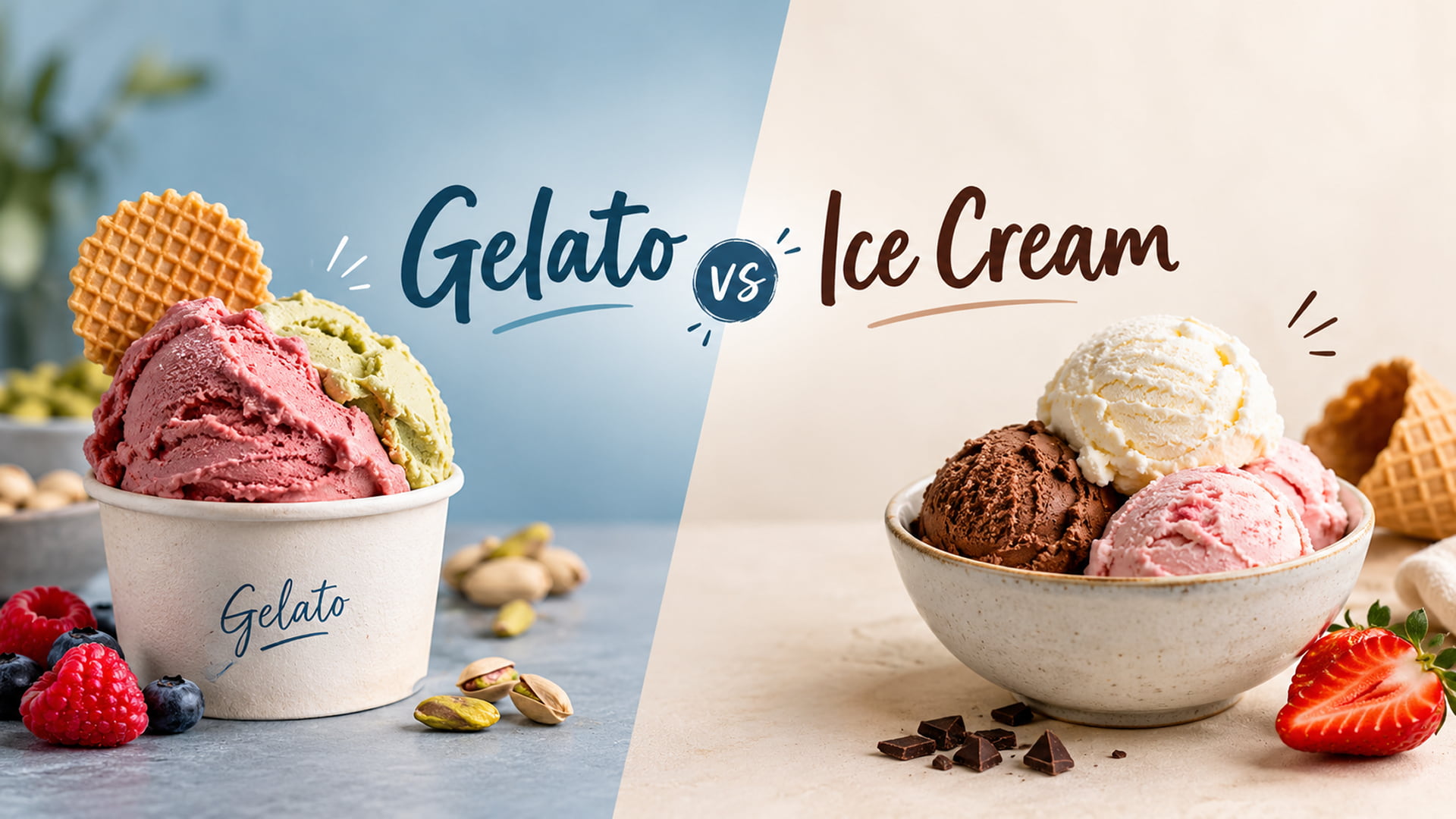
Gelato vs ice cream sounds like a simple choice of frozen desserts. Both can be made with dairy, sugar, and flavourings, yet the way they are mixed and served changes their texture. Gelato is often denser, while many ice creams are churned to hold more air.
Felicità’s Italian food menu lists gelato, Torre di Gelato, and an affogato made with vanilla ice cream and espresso. These dishes show how both terms can appear on an Italian dessert menu.
How Gelato and Ice Cream Differ
Gelato is commonly made with a higher proportion of milk and less cream than many American-style ice creams. It is also often churned with less air and served at a slightly warmer temperature. The combination gives a dense, soft texture.
Ice cream covers many styles, so the contrast is not absolute. A rich, slowly churned ice cream may also feel dense, and recipes vary between makers. The difference between gelato and ice cream comes from both the formula and the way it is handled.
Gelato vs Ice Cream at a Glance
This comparison describes common gelato and ice cream styles. Recipes vary between producers.
| Feature | Gelato (often) | Ice cream (often) |
| Dairy mix | More milk relative to cream | More cream in many recipes |
| Air | Churned with less incorporated air | Can contain more incorporated air |
| Texture | Denser and softer when served | Often lighter or firmer when frozen |
| Serving style | Often served slightly warmer | Commonly served colder |
How Milk and Cream Change Texture
Milk fat can affect how a frozen dessert feels. Many traditional gelato recipes use less fat than typical American-style ice cream. That does not make every serving of gelato healthier or lower in energy, because portions, sugar, and recipes vary.
A higher cream content can make an ice cream feel richer on the tongue. Gelato may seem lighter in fat but more concentrated in flavour because of the balance of milk, cream, and air. These are common tendencies rather than strict rules.
Why Churning and Air Matter
As frozen desserts are churned, air is introduced into the mixture. Food scientists call the increase in volume ‘overrun’. More air usually creates a lighter texture, while less air produces a denser scoop.
Penn State University explains how air content changes the texture of ice cream and why gelato commonly has less air whipped into it. Read its ice cream and gelato explanation for the food-science background.
At the table, you notice the result as a difference in body and mouthfeel. You do not need to know the production figures to enjoy either dessert.
Does Gelato Taste Stronger?
Gelato can carry a clear flavour because its lower fat level and lower air content allow some ingredients to come through strongly. This is especially noticeable with flavours such as pistachio or fruit, though the recipe still makes the biggest difference.
Ice cream can also taste richly of vanilla, chocolate, nuts, or fruit. What you prefer may come down to texture, serving temperature, and the ingredients used. The ice cream vs gelato question is as much about preference as technique.
How Are They Served?
Gelato is often displayed and served softer than hard-frozen ice cream. Its serving temperature helps it feel smooth rather than icy. Ice cream is often stored colder, making it firmer when first scooped.
Serving temperatures and textures vary from one maker to another. The terms gelato and ice cream alone do not specify one exact recipe.
Gelato on the Felicità Dessert Menu
Felicità’s listed gelato flavours are pistachio, chocolate, and vanilla. Its Torre di Gelato pairs pistachio gelato with pistachio sprinkle and pistachio cream. The menu also lists Dolce Misto, a selection of Italian desserts that includes pistachio gelato.
The affogato on the same menu is described as vanilla ice cream with espresso and pistachio. This is a good reminder that Italian dessert menus can feature both terms. The restaurant’s actual dish descriptions matter more than assuming every frozen item is gelato.
Allergen information is marked on the menu. For dietary questions, use the restaurant’s published Contact page.
Gelato, Sorbet, and Affogato Are Different Desserts
Gelato is a frozen dessert commonly based on milk. Sorbet usually centres on water and fruit rather than a milk base, though recipes should still be checked. Affogato names a serving style in which espresso is poured over a frozen dessert, commonly vanilla gelato or ice cream.
At Felicità, Sorbetto al limone is listed with Amalfi lemon and strawberry sauce. Its affogato is described with vanilla ice cream. The names are useful because they tell you what to expect when you open the dessert menu.
Which One Should You Order?
Choose gelato if you enjoy a dense, soft scoop and want to explore flavours like pistachio. Choose ice cream if you like the texture and flavour of a particular ice cream recipe. There is no universal winner.
For a fruit-based frozen dessert, sorbet is another option, but its ingredients can vary. Choose from Felicità’s published menu according to the desserts you enjoy.
Something Sweet After Dinner
Browse Felicità’s dessert menu to see the listed gelato and other Italian sweets, then use Reserve now to plan a visit. For allergen questions, contact the restaurant on +971 58 888 8421 or reservations@felicita.ae, or use the WhatsApp link on its Contact us page. The best frozen dessert is the one with the flavour and texture you enjoy.
Frozen Dessert FAQs
What Is the Difference Between Ice Cream and Gelato?
Gelato is often lower in milk fat, contains less incorporated air, and is served softer than many styles of ice cream. Recipes vary, so those differences are not universal.